

The How and Why of Refugee Law Training
Skillshare International Botswana has taken a great initiative of creating an advocacy committee that aims to advocate utilizing information strategically to the change policies that affect the lives of people who are disadvantaged. Our major concern that contributed to the establishment of the advocacy committee was the lack of issuance of travel documents for refugees. It is predominantly important for refugees to trave;l outside their country of normal residence. Such travel, for example in order to advantage of opportunities for education, training, and employment, maybe an essential prerequisite for a durable solution to their problems. Hence, our intention is to push for change in issues that limit a number of refugees from soaring to higher heights by restricting them to one place. However, advocacy does not come as a silver platter so we needed to be well informed about what refugee law says and in the process also develop our advocacy skills to challenge local and international policies. Hence, the training for civil society organization was conducted on the 14th of August 2018 to learn and be well acquainted with the refugee laws.
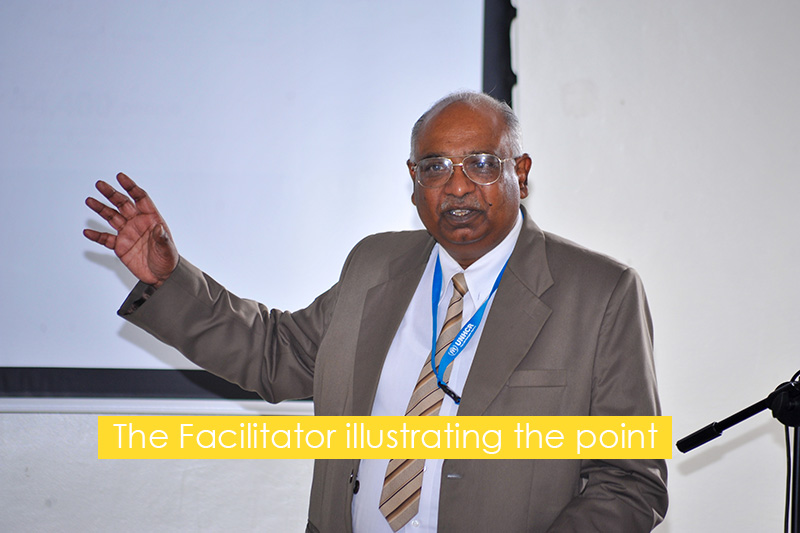
The training was organized by Skillshare International Botswana featuring the United Nations High Commission for Refugees: specifically, Mr, Gupta facilitated the training. Mr. Gupta stated that understanding the term refugee, asylum seeker, immigrants, and the population of refugees worldwide was the key in order to give practical effect to this wide-ranging and complex subject matter. The experience of UNHCR has shown that knowledge of the general law is too overgeneralized to assist in tackling certain refugee problems and it was felt they deserved separate treatment. He also mentioned that even though UNHCR is dedicated to improving lives HNHCR is not a state itself. Therefore, they assist refugees by cooperating with states. Consequently, states are security-oriented meaning every aspect is taken for security reasons. For instance, the encampment policy in one of the policies assumed to be passed for security reasons. These principles applied are not part of international law but of international conveniences.
During the training, it was stipulated that engagement in advocacy for refugee law cannot be discussed without the following conventions: 1969 OAU Convention, 1961 Convention, 1951 Convention, Yellow Book, the Statelessness convention, and Cartagena Declaration relating to the status of refugees as well as UNHCR EXcom Conclusion, Policies and Guidelines. Unlike other general conventions, these put the best interest determination of a refugee at heart. For this reason, it is fundamental that states, advocates, and other concerned organizations work on this framework when dealing with refugees.
The 1951 Convention Travel Document For Refugees
Article 28 of the 1951 Convention Provides that:
- the contracting states shall issue to refugees lawfully in staying in their territory travel documents for the purpose of travel outside their country unless compelling reason of national security or security order otherwise requires, and the provision of the schedule to this convention shall apply with respect to such documents. The contracting states may issue such a document to any other refugee in their territory; they shall, in particular, give sympathetic consideration to the issue of such a travel document to refugees in their territory who are unable to obtain a traveling document from the country of their lawful residence.
- Travel documents issued to refugees under previous international agreement by parties thereto shall be recognized and treated by Contracting states in the same way as if they have been issued pursuant article.
- An obligation to issue travel documents in accordance with this article is also assumed by States upon becoming parties to the 1967 Protocol relating to the refugee status.
Problems Facing Refugees In Connection To The Issue Of Travel Document
Finally, a number of cases have come to the knowledge of the advocacy committee in which refugee youth encountered difficulties in obtaining travel documents. These difficulties have frequently resulted from the fact that the state concerned is against the issuance of travel documents. It is apparent that to appropriate assistance the advocacy committee should strive to reinforce an unf=derstanding of special measures of treatment to enable fair access to any sort of assistance specifically concerning traveling documents. Already from this advocacy two testimonies of notable achievement were made. One involved a graduate student who could not get employment due to lack of documents but with the support of the committee, she was able to be granted a residence permit and is being considered for local integration. the other testimony was a young girl who scooped a MasterCard scholarship in Ghana (Nkwame Nkhruma University) but was not able to travel because she could not be assisted to get a passport. However, re-applied and scooped the scholarship again and the advocacy committee facilitated that she get repatriated back to Namibia and get a passport. Her trip back was successful. However, in these cases, the experience of the advocacy committee has shown that certain governments do not issue travel documents to refugees, such restrive practices have frequently had undesirable effects on refugee freedom of movement. Also, it has come to the attention of the advocacy committee that the state of concern sometimes is really clueless on refugee law that’s why advocacy should be done to also raise awareness.
Conclusion
The establishment of the refugee law workshop proved to be essential as evidence shows that some refugee challenges are a result of lack of knowledge. Indeed the possibility of solving issues related to refugees is achievable if we relentlessly advocate for change and if necessary make a consultation with UNHCR and the state.






Written by Claudi Manuel